
On Sustenance, Transition, and Leading Policy Initiatives as Smallholder Farmer –– with Grace Mbaru
As we set out to share the stories of phenomenal African women in agriculture, we are intentionally seeking out those who are doing incredible work but have rarely had their stories told to the world.
For too long, the policy arena has been seen as the exclusive domain of technocrats and experts. Meanwhile, farmers, the very people these policies are meant to serve, are rarely consulted in any meaningful way, unless as small snippets of “farmer’s perspectives” in interviews conducted by experts in policy development.
Grace’s story challenges this norm. It exemplifies how women farmers are not just feeding their communities. They are leading policy initiatives at the grassroots level.
Sylvia Kuria: Can you tell me about how you found your way to farming?
Grace Mbaru: I’m Grace Mbaru from Ndeiya, Limuru, in Kiambu County, Central Kenya. I learned how to farm growing up on my parents’ farm. Growing up in the village and not always having enough food pushed me to learn how to be self-sustainable.
I started my farming journey as a passion project to grow healthy food for my household and to connect with nature. Availability and health are important to me, and I want to be able to grow food without incurring a lot of expenses.
S: Do you remember the moment you decided to change your farming practices?
G: I’ve practiced both organic farming and conventional farming. My turning point was the high cost and low impact of synthetic inputs. After applying fertilisers, the yields were still low, and soil infertility remained a problem. Market uncertainties were another problem – we often got poor prices for our produce. I realised that organic production is cheaper while offering higher profit margins. That was the moment when I decided to convert to organic.
Grace planting her kitchen garden at the onset of the rainy season.
S: What is still difficult about organic farming, and what would make it easier?
G: It takes time to see a marked difference on the farm. Market access for certified organic produce is also a challenge. Often, I have to sell my produce to local brokers who don’t recognise or pay a premium for organic produce.
Realising these market gaps and my lack of access to specialised markets, I joined a group – the Agroecology Action Group – to champion organic and agroecology at the local level.
One of the things we lobbied for was a territorial market. Local officials also support the creation of a section for organic produce. In this way, buyers can choose organic produce, making it more accessible and better priced.
S: I know that you coordinate farmers to participate in county-level public forums. You also make formal submissions advocating for mainstreaming agroecology in local development plans. How do you think these measures can change things up for organic farmers?
G: The existence of these markets assures an outlet for organic products. We’re now able to sell directly to customers and no longer need to rely on brokers or middlemen.
As a local woman leader advocating for the inclusion of agroecology in my village, I have managed to work with farmers to register a group, giving us a common, coordinated voice when approaching county officials.
This process has also created knowledge amongst our farmers. Now we’re able to relate to leaders, hold them accountable, and voice our concerns. It has created a healthy working relationship between farmers and the local county government.
This brings more accountability to ensure that development is tangible rather than white elephants that are neither participatory and nor helpful for constituents.
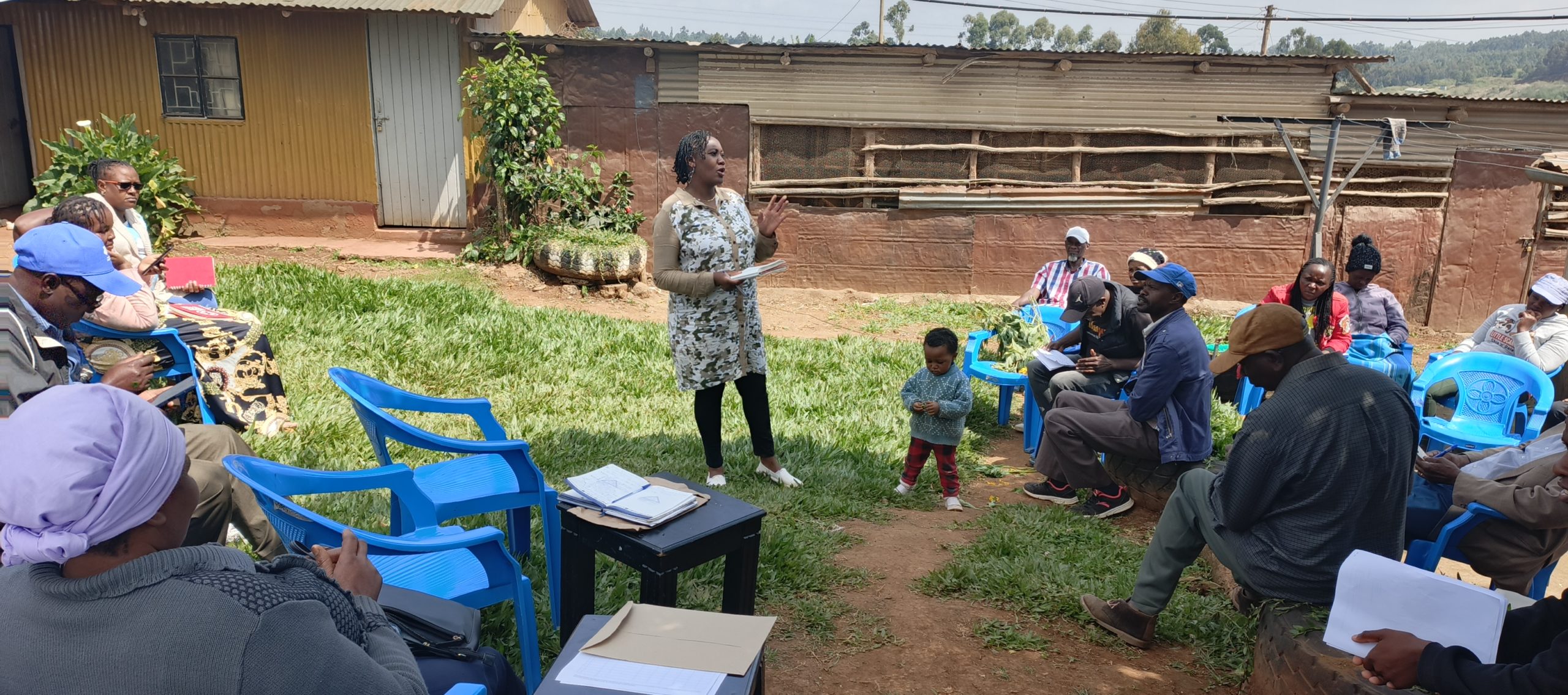
Grace and members of her community-based organisation, the Agroecology Action Group, hosting local leaders at Sylvia’s farm.
S: To close this interview, I’d like to know what advice you would give to other family farmers.
G: Get to know the negative implications of using highly hazardous pesticides. They are expensive and don’t add any value to your farming practices. They should also think about the sustainability of their health when using highly hazardous chemicals.
Don’t be afraid of change. Conventional farmers often fear change because they’re afraid of temporary losses, but they aren’t thinking about the long-term negative implications for their health and the environment. When farmers understand what they’re consuming and realise they’re consuming very toxic food, they’ll be willing to make a change.
But there’s no need to change overnight. We simply need to enable transition in a sustainable way that will bring long-term benefits. Make use of available extension services, such as soil testing, to help you know what changes your farm may need. Take your time to understand that the transition is gradual, but the benefits are phenomenal!
Grace submitting her community’s contributions at a Public Participation exercise.
Grace’s journey is one of the many unique and often-overlooked stories that help us see beyond the usual narrative –– that women farmers are defined solely by their labour in the fields. Women farmers are showing up in policy spaces, influencing markets, and contributing to the growth of organic and agroecology across the African continent.
As this campaign continues, we will be featuring more voices like Grace’s, women who are not just participating in the food system but actively reshaping it.
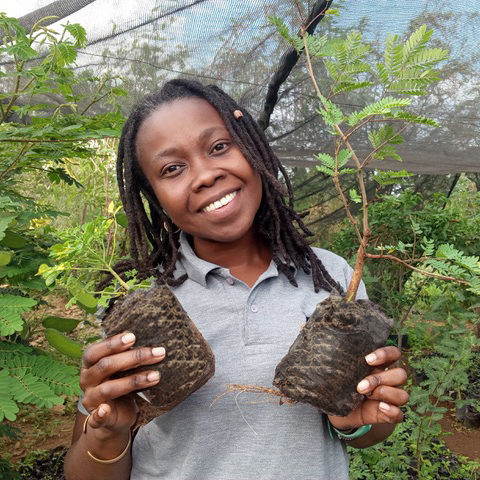
Sylvia Kuria is an organic farmer in Kenya and the founder of Sylvia’s Basket, a farm based in Limuru, dedicated to providing fresh organic vegetables to its customers. As a master trainer of the Agroecology and Organic Leadership Course (AOLC) in Kenya, she has shared her story of what first set her on the organic path to inspire others.
Beyond her farm, Sylvia is a committed member and ambassador of IFOAM – Organics International.