This article was originally written by Sylvia Kuria, an organic farmer who founded Sylvia’s Basket. She is also an IFOAM – Organics International ambassador and member.
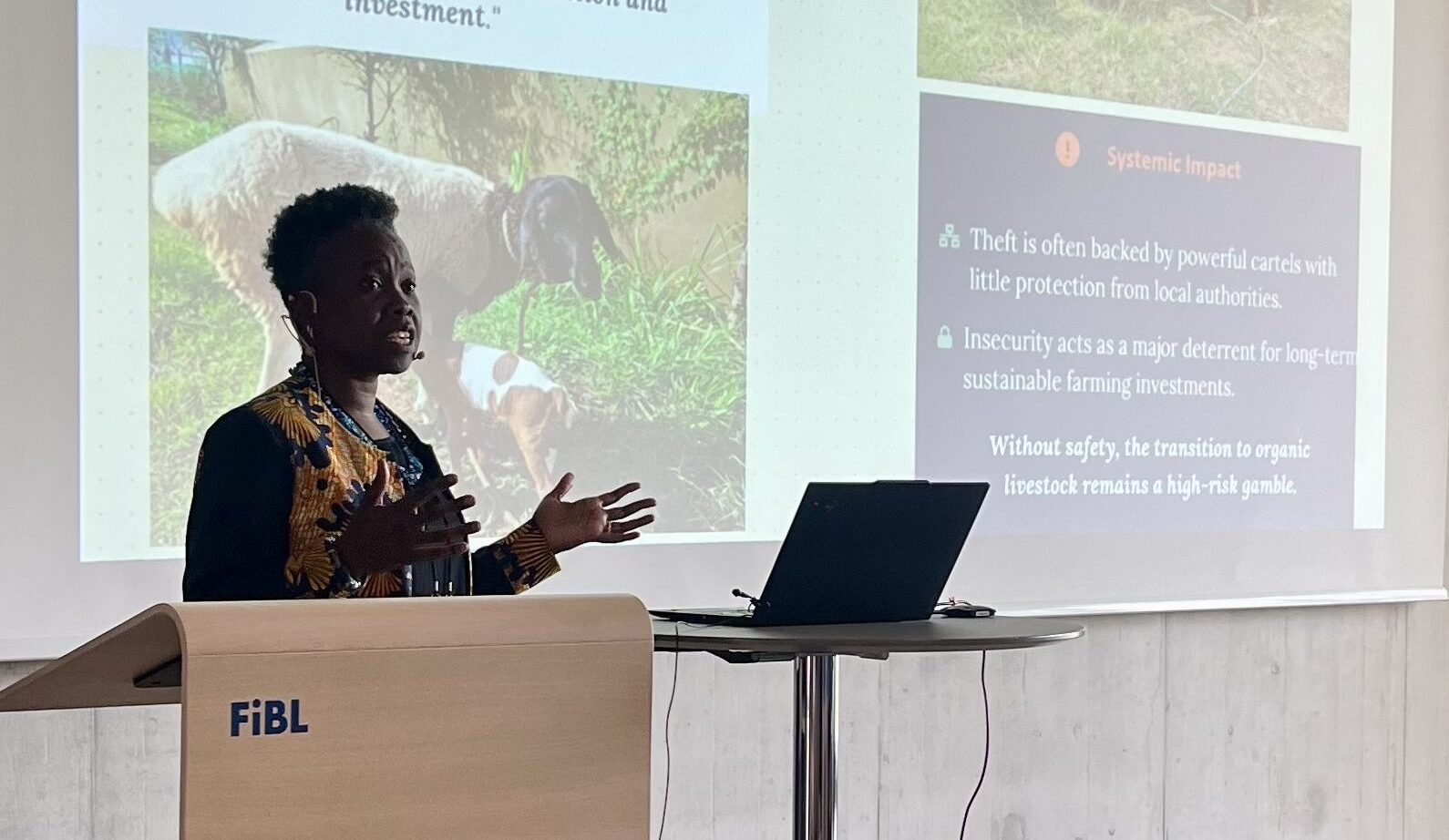
I had the honour of serving as one of the opening speakers at the IFOAM Animal Husbandry Alliance (IAHA) Conference held in Frick, Switzerland from 28 to 30 April 2026. My presentation, titled ‘Bridging the Gap: From Standards to Practice in African Organic Livestock Farming,‘ offered a small-scale farmer’s journey and perspective, drawing from my experience at Sylvia’s Basket, a 15-acre integrated farm ecosystem in Kenya.
The presentation traced the evolution of Sylvia’s Basket from a small kitchen garden started in 2009, into a fully integrated farming ecosystem. The farm employs a closed-loop system where bulls, sheep, and chickens provide manure for high-quality organic compost, while nitrogen-fixing trees such as Sesbania and Moringa feed the animals and simultaneously enrich the soil. This model demonstrates that organic animal husbandry is not only possible at the smallholder level, but that it is productive and sustainable when properly supported.
The presentation also laid bare the structural challenges facing small-scale farmers in Kenya and across the African continent: inaccessible standards written in complex technical language, a digital divide that excludes rural farmers from online resources, climate-induced feed shortages during prolonged dry spells, a training vacuum that leaves farmers with no practical curriculum for organic livestock husbandry, and the devastating impact of livestock theft and insecurity.
Central to the call to action was the urgent need to translate science into practice, developing accessible training materials and enforceable standards that work for smallholders on the ground.
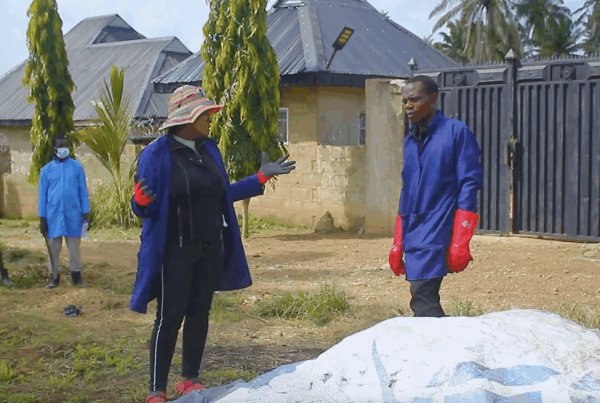
Organic animal husbandry is not only possible at the smallholder level, but that it is productive and sustainable when properly supported. ©Sylvia Kuria.
Food vs. Feed: The Smallholder’s Crossroads
One of the most thought-provoking discussions at the conference centred on the tension between food and feed, a dilemma that is acutely real for smallholder farmers across Africa. Small-scale farmers are frequently caught at a crossroads: when working with limited parcels of land, do they prioritise growing food to meet their family’s nutritional needs, or do they dedicate land to producing feed for their animals?
The priority must always be to ensure that farmers are able to meet their family nutritional needs first. However, this should not become a binary choice. We need to develop strategies that allow smallholder farmers to do both, produce food for the family and generate feed for their animals from the same piece of land. This is where integrated farming systems, intercropping, and agroforestry become powerful tools.
A critical mindset shift is also needed in how farming systems are evaluated and supported. Industrial farming models are built on the logic of maximisation, extracting the highest possible yield from a single purpose. What smallholder farmers need, however, is a model of optimisation, designing farms that are able to provide food, feed, fibre, and other ecosystem services simultaneously. This shift from maximisation to optimisation must inform policy, research, and training going forward.
African Representation in Organic Animal Husbandry
A notable gap observed at the conference was the limited representation of actors from the African continent in the organic animal husbandry space. Participation from African practitioners, researchers, and policymakers was considerably fewer compared to representation from Europe and other regions. This underrepresentation is not incidental; it reflects a systemic challenge.
The African continent faces particular difficulties in establishing and scaling organic animal husbandry systems due to two interrelated gaps: a lack of context-appropriate standards and limited access to knowledge on how to rear animals in ways that align with organic animal husbandry principles. The organic standards and frameworks that exist globally have largely been developed from and for high-input, resource-rich farming contexts, making them difficult to adapt to the realities of African smallholder systems.
This is a gap that demands deliberate, collective action, and it is one I am committed to addressing.
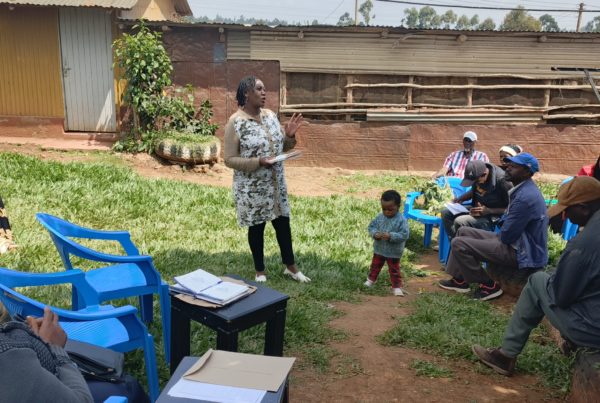
The African continent faces particular difficulties in establishing and scaling organic animal husbandry systems due to two interrelated gaps: a lack of context-appropriate standards and limited access to knowledge on how to rear animals in ways that align with organic animal husbandry principles. ©Sylvia Kuria.
Concrete Action Points Going Forward
It is easy to attend conferences, enjoy the exchange of ideas, benefit from the networking, and take in the beauty of the host country, and I did genuinely enjoy my time in Switzerland. However, I am determined not to let this experience pass as simply a pleasant international trip. The challenges facing African smallholder farmers are too urgent for that. I am leaving Frick with clear, concrete action points:
Developing Context-Appropriate Standards for Smallholder Organic Animal Husbandry
I intend to pursue collaboration with FIBL, IFOAM – Organics International and the other smallholder farmers who attended the conference from Africa, Asia, and South America — regions that share similar structural constraints. Farmers across these continents are navigating comparable challenges: limited land, climate vulnerability, restricted access to certified inputs, and standards that were not designed with their realities in mind.
Working together across these regions, we can develop standards for organic animal husbandry that are genuinely applicable to smallholder contexts. Importantly, IFOAM has already developed a Participatory Guarantee Systems (PGS) Toolkit, which provides a strong foundation. We can build upon this toolkit, integrating organic animal husbandry principles and ensuring this information is accessible to organic smallholder farmers globally. Standards developed in this way, from the ground up, by those who will use them, will have far greater uptake and practical impact than top-down frameworks.
Developing a Training Curriculum for Farmer Leaders and Training of Trainers
Standards alone are not sufficient. Over and above the development of practical standards, there is an urgent need to develop a simple, field-ready training curriculum and toolkit for Trainings of Trainers (ToT) and farmer leaders. The goal is to equip these community-level change agents with the knowledge and tools to disseminate organic animal husbandry practices directly to smallholder farmers in their communities.
Information must be made accessible to farmers in formats and languages they can understand and act on. A well-designed training curriculum or guide, visual, practical, and locally relevant, is essential if we are to bring more farmers into the organic animal husbandry fold. This is not a supplementary task; it is the core delivery mechanism through which standards become practice.
The IAHA Conference in Frick was a valuable platform for learning, reflection, and connection. It reaffirmed both the urgency of the challenge and the genuine appetite among global actors to address the gaps that currently prevent African smallholder farmers from accessing and practicing organic animal husbandry.
I return to Kenya energised and focused. My commitment is to advance organic animal husbandry knowledge dissemination as a core element of our training programs at Sylvia’s Basket and through my wider networks in Kenya and across Africa. This work is part of a larger vision: pioneering holistic, integrated farming systems that are safe, sustainable, and accessible to every smallholder farmer on the African continent.
The ripple effect of safe, healthy animal products begins with an empowered farmer.
My commitment is to advance organic animal husbandry knowledge dissemination as a core element of our training programs at Sylvia’s Basket. ©Sylvia Kuria.