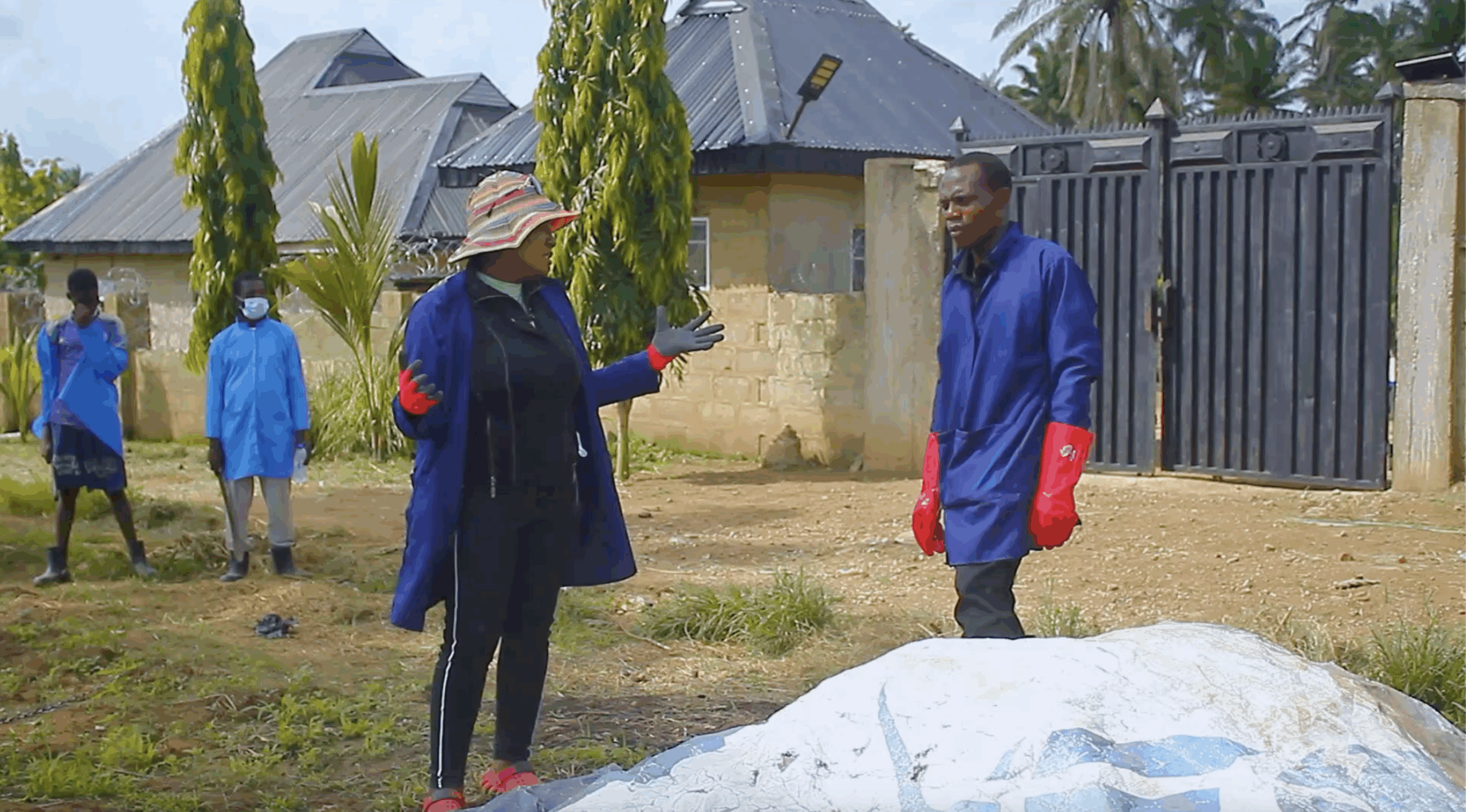
Start small, dream bigger, and stay committed –– with Christiana Ukiomogogbe
For the next stop of this interview campaign to celebrate the Year of the Woman Farmer, I travelled from East to West Africa, where there’s been incredible strides in organic and agroecological farming uptake in recent times.
I was introduced to Christiana Ukiomogogbe, an organic farmer from Lagos, Nigeria, through a mutual friend. Five years ago, Christiana made the bold decision to grow her own food organically and share that knowledge with her community.
Like any pioneer in a movement, Christiana encountered naysayers and doubters along the way, but her resilience has driven her to continue this pursuit. Now, she is raring to scale her business and bring organic produce to local markets.
Sylvia Kuria: Can you tell me how you first learned to farm?
Christiana Ukiomogogbe: I grew up in a school environment in Nigeria that took agriculture seriously. My school grew its own food and actively involved us students in the process. Like many African children, I also spent a great deal of time with my grandparents, who were farmers. They grew their own food, raised their own animals, and took immense pride in being self-sufficient. That experience planted in me a deep desire to one day grow my own (organic) food.
S: Do you remember the moment you decided to commit fully to organic farming?
C: I lived abroad for several years. When I returned to Nigeria, I was struck by the absence of safe, quality food in the market. Conventionally grown produce didn’t taste the way I remembered food tasting as a child. Around the same time, I observed a worrying rise in lifestyle diseases in my village, a health crisis I directly linked to the quality of the food people were eating.
Another striking indicator was that children in my community had stopped responding to antibiotics. I believe it was a sign of excessive synthetic inputs in the food supply. This deepened my resolve to grow clean, safe food and to be a positive force of change in my community.
I started by purchasing an acre of land for my own household food production.
On her farm Havilah Brooks Farm Limited, Christiana only provides her livestock with organic feed.
S: What challenges did you face?
C: At first, many of my neighbours were sceptical about my approach and whether it would yield anything worthwhile.
One of the major constraints has been financing. I funded my farming enterprise from personal savings and was reluctant to take on loans given the unpredictability of agricultural income. Most lending institutions were also unwilling to lend to small-scale farmers, which limited my ability to invest in infrastructure that could improve operations.
Another challenge was harsh weather during the dry season. It affected my yields and made it difficult to maintain a consistent supply of produce. Recruiting and retaining reliable farm workers has been another ongoing challenge, most are only willing to work for short periods, which means I need to spend considerable time training workers who leave before they have fully grasped organic farming principles.
S: What changed after you shifted to organic?
C: My community has since noticed the difference. People who eat produce from my farm report that it doesn’t make them ill, and that it simply tastes better. That recognition has been both validating and motivating. I gradually expanded my farm when I realised that many people in my community also wanted access to organic food but were deterred by the hard work it demands.
Now, I grow kale, ginger, corn, and green leafy vegetables, and keep free-range chickens.
S: Realising the growing demand for organic produce, how do you try to improve access to it in your community?
C: My local church runs a community food bank programme where congregants contribute farm produce. As an active member of the church, I see this as an ideal channel to make my organic food accessible to those who might not otherwise afford it. When I have a large seasonal harvest, I always share with the food bank.
I also started an initiative to donate organic free-range chicken at Christmas to single mothers in the congregation.
Beyond food sharing, I advocate for seed sovereignty – I share my organic seeds with fellow community farmers to ensure ongoing access to indigenous, locally adapted food crops.
I also attend a local organic farming school where small-scale farmers exchange knowledge, learn organic principles, and build networks with one another.
Christiana teaching her employees how to use healthy soil and compost to prepare the land.
S: You’ve achieved a lot in these last few years – expanding your farm and improving access to organic food in your community. What would be your next goals?
C: I want to establish strategic retail presence in town so that organic produce is available in local markets. It doesn’t already exist in my community.
I consider myself a pioneer, and I dream to be the first to bring certified organic produce into to my local market.
S: What advice would you give to another farmer considering going organic?
C: Don’t be lazy, don’t be discouraged, and start small. Success will follow. Stay open to learning, share your knowledge generously with others, and be a leader in your community. We must know how to grow our own food.
Aerial view of Christiana’s farm, Havilah Brooks Farm Limited.
Hearing that Christiana’s dream is to have a section for organic produce in her local market has made me reflect on my own journey as an organic entrepreneur and advocate. It’s also a timely and needed reminder that, while we’re working towards the same goals, we’re all building this movement at a different pace. This is also the reason why I wanted to start this campaign and tell the stories of women farmers across Africa – to better understand, document and represent the social trajectory behind every unique story. Next off, I’ll head to South Africa and meet another trailblazing woman whose story deserves to be shared with the world…
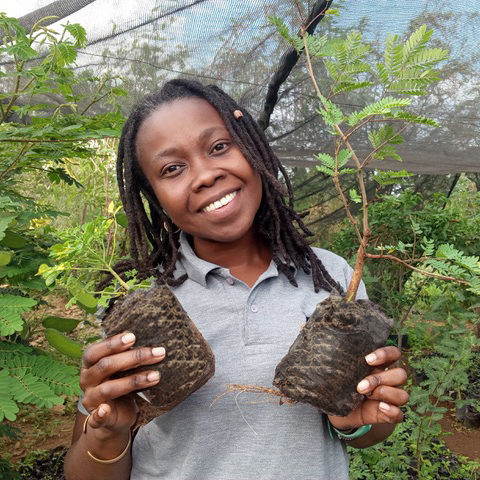
Sylvia Kuria is an organic farmer in Kenya and the founder of Sylvia’s Basket, a farm based in Limuru, dedicated to providing fresh organic vegetables to its customers. As a master trainer of the Agroecology and Organic Leadership Course (AOLC) in Kenya, she has shared her story of what first set her on the organic path to inspire others.
Beyond her farm, Sylvia is a committed member and ambassador of IFOAM – Organics International.